
Starknet Switches to Staking to Increase Security and Community Engagement
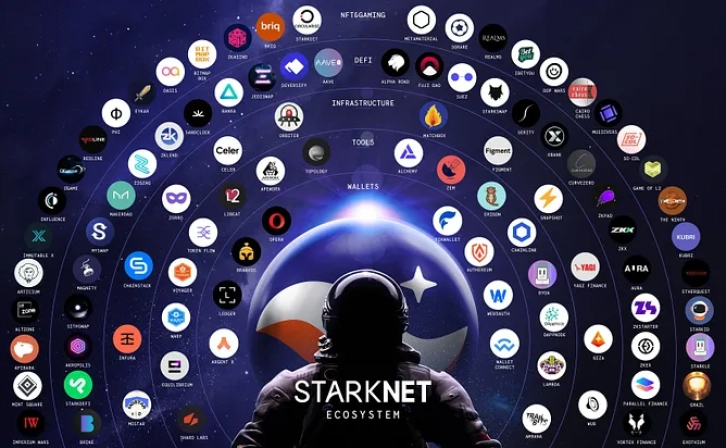
Starknet, one of the startups trying to solve the equation of security and scalability in blockchain technology, is preparing to take an important step.
Using zero-knowledge proof technology, the layer 2 network plans to implement staking by the end of 2024. This move will pave the way for Starknet’s positive transformation in terms of security and centralization.
The Starknet Improvement Proposal (SNIP) was presented by CEO Eli Ben-Sasson and his team. According to the proposal, the first staking phase will start on the mainnet of the L2 network in the 4th quarter of 2024, subject to community approval. Whether the community will accept this proposal will be determined by a management vote. This vote will play a critical role in shaping the future of Starknet.
Announcing the staking plans at the Ethereum Community Conference in Brussels, Ben-Sasson stated that the staking program will offer users the opportunity to participate more actively in the network. Users who stake will earn rewards proportional to the amount of STRK tokens they stake, with a 21-day lock-in period before funds are withdrawn. This will allow users to both generate income and contribute to the security of the network.
STRK tokens serve as Starknet’s governance tokens. It gives owners the right to vote on various proposals critical to the network’s operations. STRK is also used to pay transaction fees that support network operations.
But Starknet’s plans are not limited to this. STRK usage area will be expanded to include staking in the near future. This will be essential in running key services that are critical to Starknet’s operational capability and security. StarkWare’s chief technical writer Steve Goodman highlighted in the network’s documentation in June 2024 that staking services could include queuing, provisional L2 consensus, STARK proof services, and providing data availability.
StarkWare and the Starknet Foundation are separate organizations, with some overlap in their leadership structures. However, co-founders Eli Ben-Sasson and Uri Kolodny, who are board members at both institutions, are not involved in the Foundation’s day-to-day operations.
This staking announcement was made after the Starknet Foundation airdropped more than 700 million STRK tokens to approximately 1.3 million wallet addresses. If approved, the testnet staking network is planned to be launched in the near future. The transition to the main network is anticipated for the last quarter of 2024.
StarkWare plans to phase in the staking approach. The first phase will start with basic token staking, then move on to real-time confirmations and finally a phase where full ranking and proofing activities are used to secure the network.
Ben-Sasson evaluated the staking initiative with the following words: “This is an important step in building the staking community and technology. It opens new opportunities for users and developers.”
Considered a major milestone in Starknet’s journey towards decentralization, staking promises to strengthen the security of the network and engage the community more deeply. In this way, Starknet can become a more reliable and community-oriented network. The staking program is also expected to expand the user base and increase the adoption of the network.