Stablecoins Are More Popular Than Ever
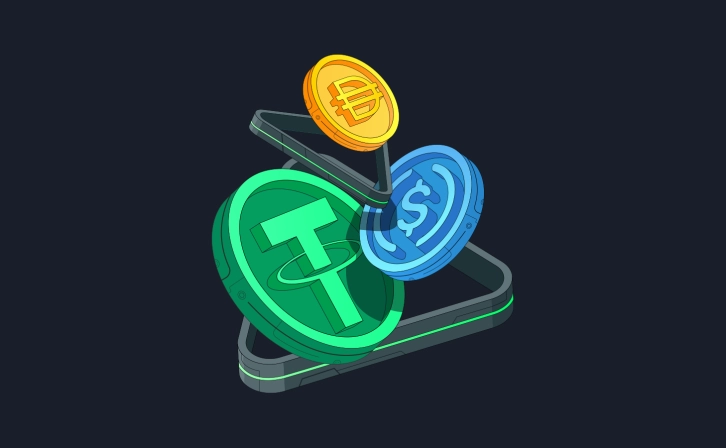
According to data source rwa.xyz, the number of addresses holding dollar- and crypto-pegged stablecoins increased by 15% this year to over 93.6 million, a record high. Stablecoins are cryptocurrencies with values tied to an external reference, such as the US dollar. They can be broadly categorized as fiat-backed, crypto-backed or algorithmic stablecoins. There are currently 35 stablecoins with a total market value exceeding $157 billion.
The rate of Tether (USDT) holding addresses, which is the industry leader with a market value of $114.07 billion, accounts for more than 80% of the total stablecoin addresses, followed by USDC and BUSD.
The number of so-called “holding addresses” even increased during the 2022 crypto bear market. The Fed has rapidly raised interest rates in 2022, increasing investors’ demand for the US dollar and US dollar equivalents such as dollar-pegged cryptocurrencies.
Moreover, the number of addresses transferring stablecoins has increased rapidly over the years. In March alone, active stablecoin addresses surpassed 26 million for the first time on record, according to rwa.xyz.
Details show that approximately 20 million, or 77%, of these addresses are based on TRON and Binance Smart Chain (BSC), representing mostly individual investor participation.
“A closer look at transfer volumes shows that, despite the dominant number of active addresses, TRON and BSC make up a minority of volumes and are popular among retail investors,” the April 23 issue of crypto analysis newsletter OurNetwork reported.
OurNetwork added that due to their large decentralized finance ecosystems, a large portion of the transfer volume originates from Ethereum, the world’s largest smart contract blockchain, and its rival Solana.
A report published by the Federal Reserve in 2022 stated that stablecoins can be used for a variety of purposes, including cross-border payments, intra-company fund transfers, and liquidity management in companies.
Additionally, a single stablecoin can serve a different purpose depending on the jurisdiction. For example, in high-inflation countries such as Zimbabwe and Nigeria, stablecoins have been adopted as alternative means of payment, remittance, and store of value. Meanwhile, in developed economies, stablecoins are often used to finance cryptocurrency purchases.
Tether LTD, the company behind USDT, recently partnered with Telegram Open Network (TON) to issue $60 million worth of USDT on the TON blockchain.
“This agreement opens the door to native use of Tether for nearly a billion Telegram users by embedding USDT on the blockchain of the peer-to-peer messaging app,” OurNetwork said.
Regulatory clarity will likely encourage banks to adopt stablecoins, according to ratings agency S&P. Last week, U.S. Senators Cynthia Lummis (R-Wyo.) and Kirsten Gillibrand (D-N.Y.) introduced a joint 179-page bill on regulating stablecoins.
“If the bill is approved and followed by relevant banking regulations, the new rules could provide banks with a competitive advantage by limiting entities without a banking license to a maximum of $10 billion in exports,” S&P said.
S&P added that USDT issued by a non-US entity is not a permitted payment stablecoin under the proposed bill, meaning US entities cannot hold or transact with Tether. Therefore, Tether’s dominance may decline and users may possibly switch to US-issued stablecoins.