RWA Industry Could Grow 50 Times by 2030
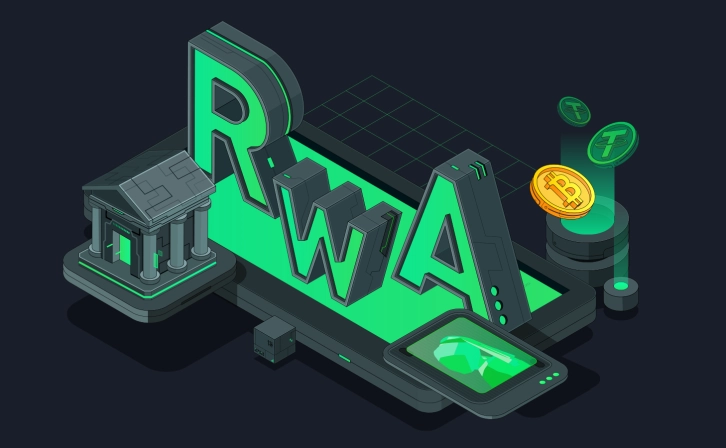
Financial markets have the potential to reshape investments and asset ownership by 2030, accounting for a significant portion of the industry's growth to exceed $10 trillion.
The real-world asset (RWA) tokenization sector has experienced a significant boom in 2024, which looks set to deliver significant growth by the end of the decade.
RWA tokenization is the process of digitizing assets, and this sector is expected to grow over 50 times by 2030, according to the Tren Finance research report compiled by some major financial institutions and business consultancy firms.
It is predicted that the market size of the RWA industry could reach a value between 4 trillion and 30 trillion dollars. If the industry reaches nearly $10 trillion, which is at the median of estimates, this would represent a growth of more than 54 times its current value.
Real-world assets offer significant growth potential, with a current valuation of $185 billion, including stablecoins. The RWA sector may encompass more of the global financial markets as the industry matures. This could radically change the way people invest, trade and own assets.
The Tren Finance research report states, “The integration of revenue finance with blockchain technology is not just a trend, but a fundamental shift towards a more accessible, efficient and dynamic financial ecosystem.”
Stablecoins still dominate the RWA sector, accounting for over $170 billion of the market. In contrast, the value of on-chain tokenized securities and treasury papers is only 2.2 billion dollars.
Integrating real-world assets into the blockchain can offer significant benefits across many industries, especially in the financial sector.
Tokenization provides independence from geographical boundaries, making transactions faster, cheaper and independent of third-party intermediaries.
“DeFi innovations have already revolutionized finance, and when combined with RWA tokenization, the possibilities are endless,” commented Christian Santagata, product marketing manager at RWA protocol re.al, noting these advantages provided by tokenization.
Santagata stated that this unique combination will increase components, increase capital efficiency and introduce new financial elements designed for this new category.
The development of RWA tokenization will not only enable the evolution of the financial system but also provide more opportunities for investors.
The effects of this change in global financial markets may reshape investment habits and asset management strategies. In particular, the integration of traditional finance and blockchain technology has the potential to create a more accessible and dynamic financial ecosystem.
The importance of RWA tokenization lies in the advantages it provides, especially for investors. Transferring ownership of digital assets more easily and securely enables investors to make faster transactions. At the same time, this process allows investors to diversify their portfolios more efficiently.
RWA tokenization stands out as an area that has the potential to revolutionize financial markets. This sector will enable digital assets to take a greater place in every aspect of our lives and offer new investment opportunities.
It is eagerly awaited how this sector will change the general structure of financial markets by 2030. The growth of the sector could profoundly impact not only financial systems but also economic structures around the world. Therefore, the development of RWA tokenization will continue to provide significant opportunities for both investors and the masses.