
Russia Plans Cross-Border Trade with Cryptocurrencies
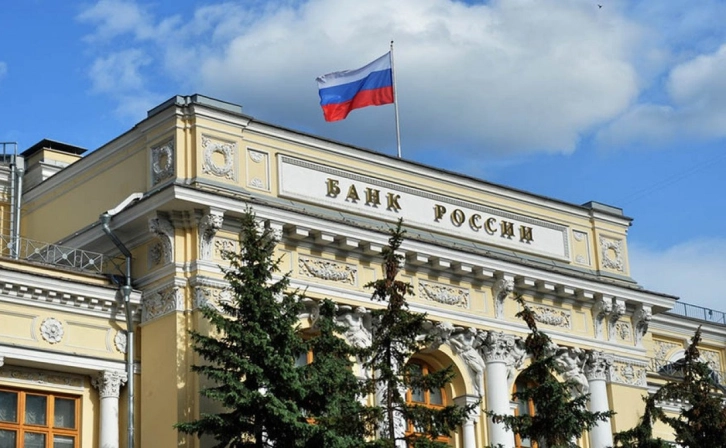
The Bank of Russia appears to be accelerating plans to test cross-border cryptocurrency transactions for qualified investors. This step is considered as part of Russia's efforts to explore the use of cryptocurrencies in international trade. The central bank specifically aims to create a category called qualified investors, allowing them to trade crypto assets for cross-border transactions.
Russia’s stance on cryptocurrencies appears to have softened over time, with the country facing Western sanctions seeking alternative routes to its international trade.
Although the central bank has so far maintained a cautious stance towards cryptocurrencies, the new statements open the door to the potential use of digital assets in cross-border trade.
In an interview published in Izvestia, one of Russia’s leading newspapers, on Monday, August 26, Alexey Guznov, State Secretary and Deputy Governor of the Bank of Russia, stated that a certain group, especially defined as qualified investors, may be allowed to participate in cryptocurrency trading.
This group will be able to trade digital currencies to a limited extent. However, Guznov emphasized that this stage is still early and all potential risks need to be analyzed in detail.
There is currently no legal framework defining these qualified investors in Russia. However, the central bank is considering amending the law on this issue and creating a new category. This could be a regulation that would only allow a select group of investors to trade digital assets.
Guznov’s statements show that Russia’s strict stance towards cryptocurrencies is starting to change and it is becoming more open to the use of these assets, especially for cross-border trade.
The central bank also welcomes the use of stablecoins for international trade. However, these stablecoins must meet certain criteria. According to Guznov, if a stablecoin is backed by an obligated party and is centralized and tokenized, like digital financial assets issued in Russia, then under existing laws these stablecoins can be used for cross-border transactions. Such stablecoins are considered a potential solution that can reduce risks in cross-border trade.
However, algorithmically managed stablecoins will be considered cryptocurrency when launched without a supporting entity and will require an experimental regime for their cross-border use. This shows that Russia will gradually review and improve regulations regarding cryptocurrencies and digital assets.
These new steps of the Central Bank of Russia regarding cryptocurrencies also include regulations that allow digital asset trading through the country’s national stock exchanges. Recent news has revealed that Russia is planning to establish at least two local crypto exchanges in Moscow and Saint Petersburg.
The aim of these exchanges will be to not only facilitate cryptocurrency trading, but also to focus on the development of stablecoins based on the Chinese yuan and a basket of currencies of the BRICS countries. This step is considered as part of Russia’s long-term goals to use digital assets in global trade.
This change in Russia’s strategy towards cryptocurrencies can be seen as a result of uncertainties and geopolitical developments in the global financial system. In particular, Western sanctions and restrictions on international trade seem to have pushed Russia to seek alternative ways.
In this context, the ability to use digital assets and stablecoins in cross-border trade could play an important role as part of Russia’s effort to increase its financial independence.