Objection File from Ripple to SEC
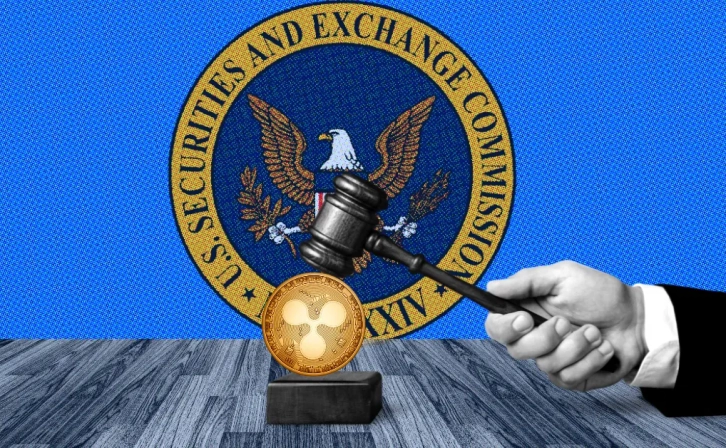
Ripple has filed a cross-objection file known as Form C, which includes the issues it will raise in its objection to the US Securities and Exchange Commission (SEC).
Ripple’s Chief Legal Officer, Stuart Alderoty, announced on Form C is a document used to outline specific grounds on which the company challenges a prior decision regarding corporate sales from the District Court for the Southern District of New York.
In the filing, Ripple stated that each point of objection is subject to a “de novo” standard of review; This means that the court must reconsider its previous decisions on the basis of legal practice.
Ripple’s Form C filing comes a few days after its previous Form C filing with the SEC on October 18. The SEC asked the court to reconsider its decision allowing the sale of XRP tokens on exchanges and personal sales of the token by Ripple CEO Brad Garlinghouse and co-founder Chris Larsen.
One of the main issues of appeal raised by Ripple was the district court’s application of the Howey test to Ripple’s XRP transfers. The company stated that these transfers fall within the scope of investing money in a joint venture with the expectation of profit from Ripple’s efforts.
Another point of objection questioned whether the court’s decision took into account the lack of fair notice of Ripple’s conduct. The company argued that the SEC’s statements regarding the application of federal securities laws for digital assets and digital currencies were “inconsistent” and “intentionally vague.”
Additionally, Ripple questioned whether an investment contract under Section 5 of the SEC Act of 1933 requires “essential components” that impose post-sale obligations on the seller and give buyers the right to demand and receive profits.
Finally, Ripple raised the issue of whether the requirements set forth in Rule 65 of the Federal Rules of Civil Procedure would bar an injunction that “does no more than direct the blocked party to comply with the law.”
Regarding the cross-objection, Alderoty stated through X that the center of the case is not on whether XRP is a security or not. Because XRP is not classified as a security by law.
Instead, he claims that the SEC is attempting to “create distraction and confusion” for Ripple and the broader crypto industry. He also stated that he believes the hard part of the case has already passed because Ripple will not have to present any more evidence or argue over the documents.
“The Family Appeals Court is reviewing the previously established record, and we have an excellent record,” Alderoty said. “The SEC cannot introduce new evidence or ask us to produce more,” he said.
Earlier this year, the SEC accused Ripple Labs of unfair sales worth $1.3 billion due to its XRP tokens being classified as unregistered securities. The SEC also claimed that XRP created profit expectations for investors.
As the case approaches a new phase, both sides are preparing for a lengthy legal battle that could change the crypto landscape in the United States.