Redefine the World of Investment with the Power of Blockchain
“The Times They Are-A Changin'” – This opening line from one of Bob Dylan's most beloved songs has become the most apt phrase when discussing contemporary asset holding models. Last year, a comprehensive market study conducted by Ernst & Young (E&Y), one of the “Big Four” accounting firms, pointed out that investment in digital assets and interest in tokenization has increased significantly.
The report found that institutional investors are becoming increasingly confident in the long-term value of blockchain and digital assets. According to the E&Y survey, 57% of institutional investors are interested in investing in tokenized assets, and 93% of respondents believe in the long-term value of blockchain or digital technology and digital assets.
Interestingly, institutional investors not only tokenized assets but also had a clear strategy on how to proceed. For example, 71% of institutional asset managers surveyed were looking to tokenize their assets through partnerships with digital native or tokenization firms. While 21% planned to establish the infrastructure in-house, 5% planned to purchase a startup operating in the field of tokenization.
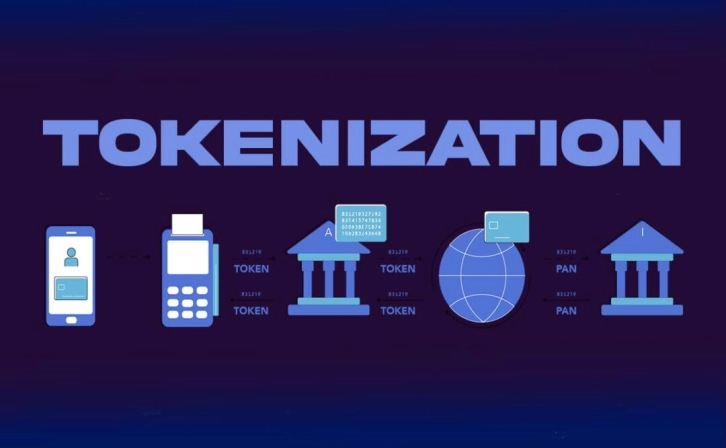
McKinsey & Company defines tokenization in one of its statements as “the process of creating a digital, unique and anonymous representation of a real thing.” Practically, tokenization requires a blockchain on which the transaction must occur. Institutional investors prefer public permissioned blockchains for the tokenization of their assets, followed by private chains (40%) and public chains (22%).
One of the most attractive aspects of tokenization is its inclusivity, allowing a wide range of assets to be tokenized. These include real estate, works of art, bonds and stocks, intellectual property rights, and even identity and data.
There are numerous examples of real-world assets being tokenized and made available to a new customer and investor base. Take gold, for example, which has been one of the most reliable assets throughout history. Last year, the total market value of tokenized gold assets exceeded $1 billion.
Tokenized gold involves physical gold bars whose proprietary rights are stored as digital tokens on the blockchain. While physical gold is securely held off-chain by financial institutions, tokenized gold issuers mint digital tokens on the blockchain to represent ownership rights. Equivalence is determined by the issuing company, as an on-chain token represents one gram of physical gold.
Many companies now offer such tokenized gold tokens. For example, New York-based fintech company Paxos Trust Company offers Pax Gold (PAXG) tokens, while well-known blockchain company Tether offers Tether Gold (XAUT). Like gold, art is an asset class that has enthusiastically embraced tokenization. For example, Freeport, a blockchain platform, announced that it has completed its SEC review and is ready to launch its tokenized art platform with four iconic Warhol works for collectors, including the legendary Baby Jane Holzer. The platform did not survive, but the following in the press release made a useful observation.