Post-Halving Rollercoaster!
Transaction fees in Bitcoin have gone on a rollercoaster in recent days. Fees, which reached record levels on April 20, when the fourth Bitcoin halving took place, dropped sharply the next day, leaving question marks in the cryptocurrency market. Digging deeper into these fluctuations can reveal the dynamics in the Bitcoin network, the effects of the halving event on fees, and clues about the future of the crypto economy.
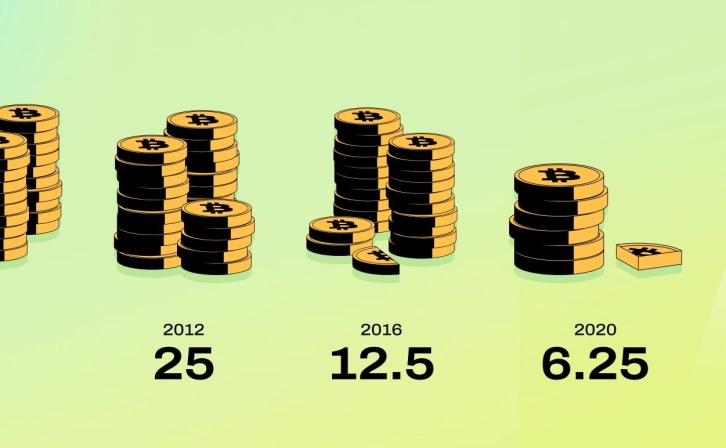
April 20 was a historic day on the Bitcoin network. The fourth halving event occurred and the Bitcoin block reward decreased by half, from 6.25 BTC to 3,125 BTC. This supply reduction mechanism is designed to keep the price of Bitcoin rising in the long run. But unexpectedly, the average fee for Bitcoin transactions on the same day also reached a record high of $128.
There are two main factors behind this situation. First, pre-halving investor excitement and increased adoption caused a sudden increase in Bitcoin network traffic. Users were willing to pay high fees to have their transactions confirmed faster. Secondly, the Runes protocol, a new token standard on the blockchain, was launched on the same day. This protocol allows users to print rare satoshis (Bitcoin’s smallest unit) onto the blockchain. The combination of the halving and the launch of the Runes protocol has skyrocketed demand for block space and sent transaction fees skyrocketing to record levels.
ViaBTC, which was mining Bitcoin on the halving block (block height 840,000), took advantage of this density and earned an incredible transaction fee of 37.7 BTC (approximately $ 2.4 million). This is a striking example of how high the demand for block space for printing rare satoshis can be and how this demand can affect transaction fees. However, this extreme level of fees is not sustainable in the long term as it could hinder the daily use of cryptocurrencies.
The high fees of the halving day fortunately did not last long. According to Mempool.space data, transaction fees began to drop rapidly the next day and are currently down to $8-$10 for medium-priority transactions. There are several reasons for this rapid decline.
The increase in Bitcoin price due to the decrease in Bitcoin supply due to halving made transactions relatively cheaper. Due to high fees, network traffic returned to normal levels and demand for block space decreased. Some users may have postponed their transactions or balanced demand by turning to alternative networks. Bitcoin miners managed to offset the loss of block reward due to halving by taking advantage of high fees in the short term. This maintained the sustainability of mining operations, which is critical to ensuring the security of the network.
There have also been interesting developments in the transaction fee war between Bitcoin and Ethereum. Due to pre-halving rush and the launch of the Runes protocol, Bitcoin outperformed Ethereum for six consecutive days from April 15-20. However, Bitcoin’s average transaction fee currently lags behind Ethereum. This may demonstrate the benefits of the Ethereum network’s work on scalability solutions.
In the future, Bitcoin and Ethereum transaction fees may vary depending on network traffic, adoption rate, the success of both networks’ scalability solutions, and the adoption of new applications such as decentralized finance (DeFi).