
New Solutions for Ethereum Staking and Block Generation from Vitalik Buterin
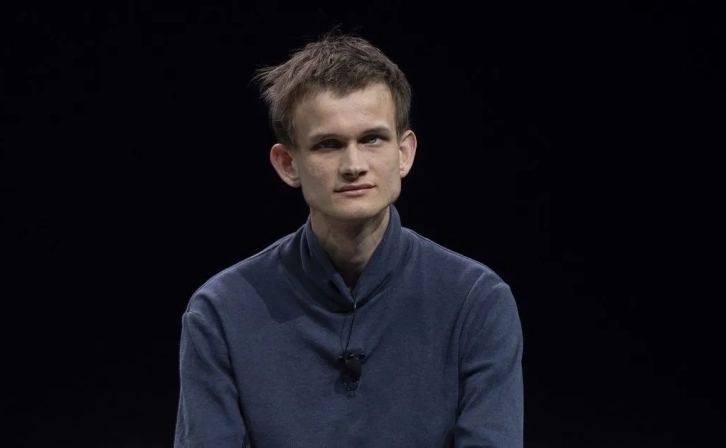
Buterin suggested placing a cap on the amount of Ether a user can stake and limiting staking penalties to 12.5% of staked Ether.
Ethereum co-founder Vitalik Buterin presented several solutions to reduce block production and staking centralization during the “Scourge” phase of Ethereum’s technical roadmap.
In a post published on October 20, Buterin noted that economies of scale in staking have led to smaller staking pools shifting to larger pools, with the two entities accounting for 88% of all Ethereum blocks in the first two weeks of this month.
Buterin emphasized that staking centralization is “one of the biggest risks” for Ethereum, which could increase transaction censorship and lead to “other crises.” He used the following statements:
“One of the biggest risks for Ethereum L1 is proof-of-stake centralization due to economic pressures.”
Buterin stated that it is already sufficient to protect Ethereum against 51% attacks with 30% staked Ether, but additional risks will arise if all Ether is staked.
Staking will become less of a “profitable task” and impose more obligations on Ether holders, while the slashing mechanism will be weakened and the liquid staking token can take over the “money” network effects of Ether.
To address these issues, Buterin suggested capping the amount of Ether a user can stake and limiting staking penalties to 12.5% of Ether staked. This can be achieved through a two-layer “risk-bearing” (slashable) and “risk-free” (non-slashable) staking model.
Their concerns about centralization in block production come after Ethereum Foundation researcher Toni Wahrstätter found that two Ethereum block builders — Beaverbuild and Titan Builder — accounted for 88.7% of all Ethereum blocks in the first two weeks of October.
Ethereum follows the proposer-maker split method for block creation. Makers create blocks for the recommender to review and usually choose the most profitable one.
However, assigning “special” tasks to certain actors led to centralization problems. Stating that Ethereum’s security is not in danger, Buterin said that this problem may worsen transaction censorship and Ethereum users may have to wait up to 114 seconds instead of 6 seconds to be included in a block.
This delay could give block makers the opportunity to extract user revenues with sandwich attacks or introduce “significant market manipulations” with decentralized finance liquidations.
Buterin presented a proposal called “fork-choice-enforced inclusion lists”; With this suggestion, the task of selecting transactions will return to the proposer or staker, while the maker will simply list the transactions and add some of them.
“BRAID” was also suggested as an alternative solution. This proposal would be designed to split the block production process among several actors, requiring only a “moderate level of proficiency” for each actor to maximize its revenue.