The New Congress and the President's Role in Crypto Regulation

CFTC (Commodity Futures Trading Commission) Chairman Rostin Behnam made important statements about cryptocurrency regulations.
Behnam noted that a new Congress and president have the potential to accelerate crypto regulations, which are currently at a standstill. He stated that negotiations on crypto regulations in the United States are blocked and that the agency’s “arms are tied” for this reason.
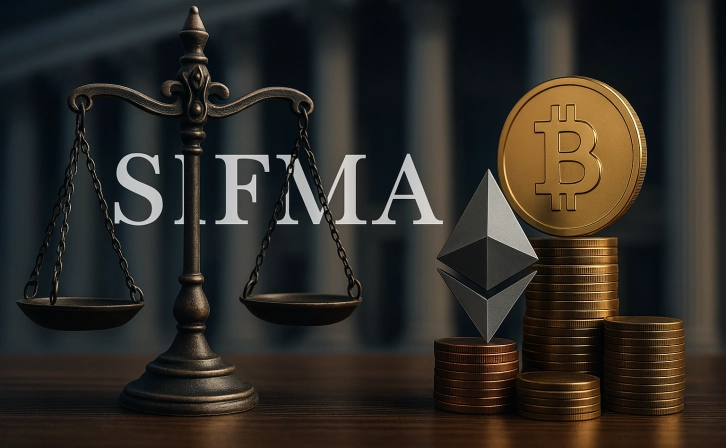
Speaking at the annual meeting of the Securities Industry and Financial Markets Association (SIFMA) held in New York on October 21, Behnam emphasized that efforts to adopt a legislative framework to regulate the digital asset industry have so far come to a halt.
This situation causes a lack of control and regulation in the cryptocurrency market.
But Behnam remained hopeful that a new Congress and president could make progress on the issue.
“I’m not making a definitive prediction that anything will happen by the end of the year, but I think there’s a changing appetite around digital assets and technology with this election,” he said.
With these statements, he pointed out that there may be a change in the regulation of the cryptocurrency ecosystem.
Stating that in the absence of regulations, the CFTC’s abilities to supervise the crypto market will be limited, Behnam stated that this leaves investors defenseless.
“This creates a really vulnerable market, leaves vulnerable customers and keeps institutional money on the sidelines,” he said. He pointed out that the limited powers of the CFTC could negatively affect financial stability.
SIFMA President Kenneth Bentsen said there was “growing frustration” in the financial sector over this situation.
Brokerage firms face uncertainty about whether they can operate in the crypto market or whether they can succeed by avoiding enforcement actions.
This uncertainty becomes a situation that threatens the security of companies in the markets.
Behnam also explained that the CFTC is using artificial intelligence (AI) technology to strengthen market oversight. “We use artificial intelligence and different types of analytics to examine the data we collect,” he said.
He expressed his belief that there are significant opportunities to detect market manipulation and cyber attacks using artificial intelligence and data analytics.
“If we can start using AI to collectively adapt, there will probably be a lot less enforcement cases,” Behnam said. This means regulators have more effective control over the market.
Additionally, on October 17, the Treasury announced that it analyzed data using machine learning artificial intelligence and recovered $4 billion in fraudulent and improper payments in fiscal year 2024. This reveals the potential of artificial intelligence to increase its role in financial supervision and regulations.
It is clear that the CFTC and other regulatory authorities need both the development of the legislative framework and the integration of new technologies to provide more effective oversight of the cryptocurrency market. In this context, future developments will be of critical importance for the regulation of the cryptocurrency industry.