
Bitcoin Rich Alone: How Is Solo Mining Possible?
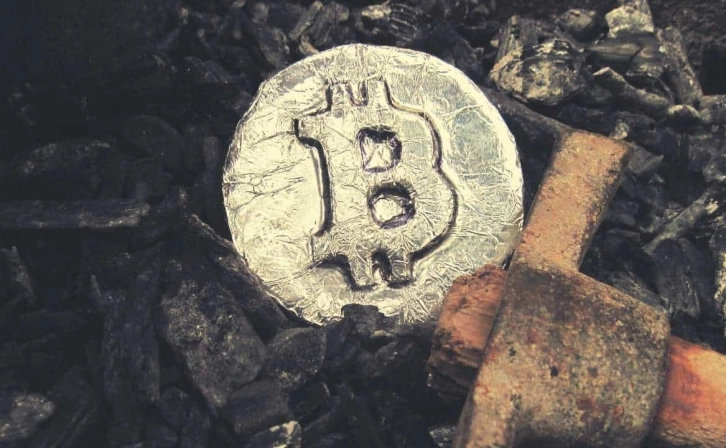
Bitcoin mining is a tough job. Enormous amounts of processing power are required to secure the network and create new Bitcoin blocks. This process is usually carried out through mining pools, whereby individual miners combine their efforts to increase their chances of finding blocks. But every now and then, one brave miner decides to try his luck on his own and achieves incredible success.
Here is what happened on April 28: Con Kolivas, software engineer and manager of the solo mining pool called ckpool, announced that a miner solved the 282nd solo block in Bitcoin history. This incident highlights how challenging Bitcoin mining is, both in terms of competition and potential rewards.
The winning miner achieved an impressive feat at the time. It had a high hash rate of approximately 120 petahashes per second (PH/s). Although this represented only 0.02% of the network’s total hash rate, it alone significantly increased the odds of finding a block.
So how did this solo miner get so lucky? After reviewing the block solution summary, Kolivas suggested that the miner likely turned to solo mining for two reasons.
The first possibility is related to the halving event that Bitcoin experienced in mid-April. The halving reduced the block reward from 6.25 BTC to 3,125 BTC. This could reduce the profitability of mining pools. According to Kolivas’ theory, this miner may have become unable to cover electricity costs with pool mining and decided to try his luck solo.
Another possibility is that the miner in question is already mining solo, occasionally renting large amounts of hashing power. This strategy, although high risk, can increase the chances of finding a block on its own.
Solo mining is extremely rare. While more than 841,300 blocks have been produced since Bitcoin’s emergence in 2009, only 282 of them have been solved through solo mining. This statistic reveals how difficult it is to find blocks solo.
Mining difficulty depends on the total hash rate on the network. The higher the hash rate, the harder it is to find blocks. As Bitcoin mining has become increasingly popular, the network hash rate has also increased significantly. This further reduced the likelihood of solo mining success.
However, there is also a positive side to this situation. A high hash rate significantly increases the security of the Bitcoin network. The more hash power the network has, the more difficult it becomes to mount an attack.
In conclusion, the event on April 28 highlighted two important aspects of Bitcoin mining. First, solo mining is an extremely challenging and rare feat. Secondly, the security and robustness of the Bitcoin network is strengthened thanks to the increasing hash rate. Although this solo miner has yielded a large reward, it should be noted that solo mining is a high-risk venture. In most cases, mining pools offer a safer and more stable option for individuals.