How Did US Inflation and Interest Rates Affect Bitcoin?
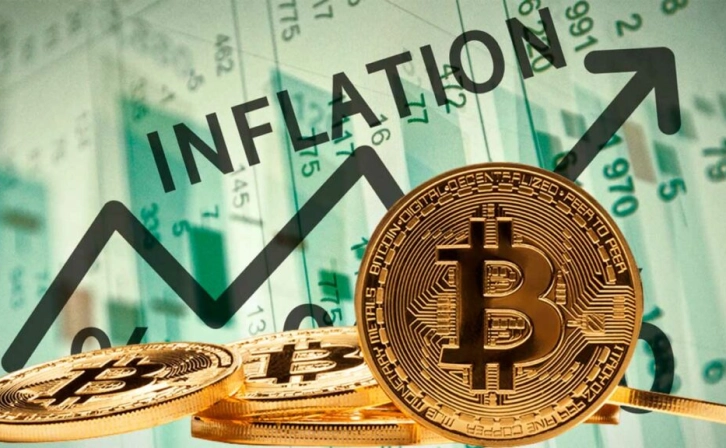
Various reports, including critical inflation data and interest rates, were released in the United States on June 12. How has the cryptocurrency market reacted to this latest macroeconomic data?
At the end of May, annual inflation in the USA decreased from 3.4% to 3.3%. This figure was below the average forecast of 3.4% and was the lowest since April 2021. The indicator excluding food and energy prices increased by 0.2% compared to the previous month and by 3.5% compared to May last year. These values were 0.3% and 3.6% respectively a month ago. Analysts expected annual rates to fall to 3.5% and monthly rates to fall to 0.3%.
Macro data encouraged Bitcoin’s growth, gaining 2% in the first 15 minutes. During the same period, Ethereum rose 2.5%. The US Federal Reserve System maintained its interest rate range at 5.25-5.5% annually.
According to CoinMarketCap data, the cryptocurrency market reacted negatively to this decision. Bitcoin price immediately fell below $69,000. Additionally, most digital assets in the top 10 showed a slight negative trend in terms of market capitalization.
K33 Research analysts noted that clients of unregulated crypto derivatives platforms are exposed to high risks ahead of critical inflation data and the Federal Reserve meeting, increasing the potential for significant liquidations ahead of vital macroeconomic events.
Analysts predict that open interest (OI) in Bitcoin perpetual futures has reached a one-year peak after a two-week uptrend. During this period, investors who bet on the bull market suffered losses on paper from their positions.
K33 noted that the significant inflows observed into BTC-ETFs amid aggressive base trading on the CME may only partially reflect arbitrage between the spot and futures markets. This is more about demand, not a hedging strategy.
The Federal Reserve System’s (Fed) base rate is the interest rate at which banks make short-term loans to each other. It is the main tool of monetary policy in the United States. Changes in the key interest rate have a significant impact on the financial system and stock market and are reflected in the value of various asset classes, including Bitcoin and altcoins.
Why does Bitcoin price change when the Fed interest rate increases? During periods of economic growth, the Fed charges a low base interest rate, which encourages investment and reduces the overall savings rate. Because higher-risk assets have higher return potential, they are more popular among investors.
During an economic recession or crisis, the Fed raises its key interest rate. This encourages economic actors to increase their savings, sell high-risk assets and invest in “safe havens”, that is, conservative instruments with increased profitability.
Fed interest is an important factor, but it is not the determining factor for cryptocurrency prices. The decline in yields on 10-year Treasury notes to 4.47% in early May from a high in November 2023 made high-risk assets such as technology stocks and cryptocurrencies more attractive to investors.
Risk assets, including cryptocurrencies, are teetering on the brink of a major correction due to actions by the Fed, which has pledged to keep current funding rates in the range of 5.25% to 5.5% in response to lack of progress towards meeting its 2% inflation target.