Legal permission to the upbit crypto exchange in South Korea
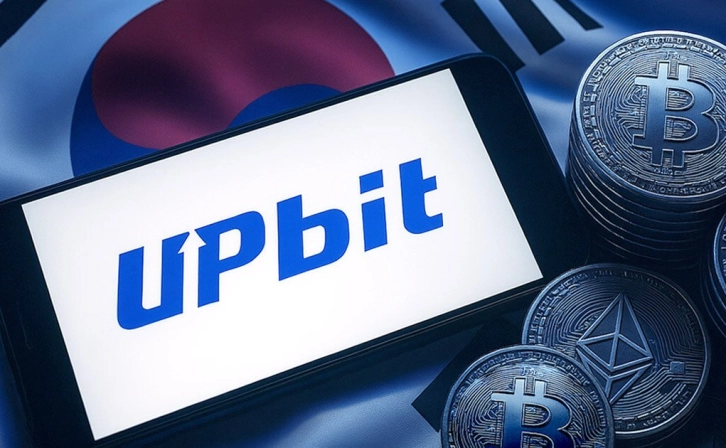
Dunamu is trying to reversed the three -month partial stopping decision implemented by the Finance Intelligence Unit (FIU), the financial regulator of South Korea.
FIU forbade him from performing deposit and withdrawal for new customers to the crypto currency exchange called Upbit. As the reason for this ban, UPbit has been demonstrated by indifferent virtual asset service providers (VASPS).
This decision of FIU reveals that the stock market is not compatible with virtual asset regulations and that he thinks that his users are at risk.
Dunamu, the parent company of UPbit, filed a lawsuit for the cancellation of this decision and requested a precautionary measures that would temporarily remove the decision to stop. Upon the application of Dunamu, the court took a temporary decision that allowed UPbit to serve new customers.
This enabled UPbit to continue to accept new users while the legal struggle was in progress. This temporary decision from the court will be valid for 30 days as a result of the legal process. This decision, especially UPbit’s largest crypto exchange in South Korea, aroused a wide repercussion in the sector.
Crypto exchanges in South Korea have been faced with strict arrangements in recent years. In 2018, anonymous crypto trade was banned in the country and it was compulsory for crypto currency users to perform authentication.
This arrangement aims to ensure that the stock exchanges to accurately collect user information and verify their identity. During FIU’s investigations, UPbit faced a violation of 500,000 to 600,000 KYC (diagnosis of customer). When FIU examined the trading records and customer information of the stock market, he detected such a large Violation of KYC.
South Korea also aims to strengthen the control of crypto trade by tightening financial regulations. In the country, as of 2024, reporting requirements for cross -border crypto asset transactions were introduced.
This is particularly considered as an important step in the fight against crimes such as tax evasion and foreign exchange manipulation. The crypto currency market is constantly controlled by the regulators and the government develops strategies to follow such transactions in advance.
45,000 transactions made by UPbit with indifferent foreign exchanges were also examined by FIU. These transactions were contrary to the country’s financial regulations and therefore became one of the main reasons for the sanctions faced by the stock market.
Following these inspections by FIU, it was decided to remove 17 crypto exchange applications from Google Play. FIU also plans to impose similar restrictions on the Apple App Store. These steps are part of the regulators’ efforts to implement and secure more audit in the crypto currency market.
These legal processes faced by UPbit once again reveal how hard and tight the South Korea’s regulations to the crypto money market are. UPbit and other crypto exchanges will have to take more transparency and security measures to adapt to such regulations in the coming period.