South Korea hardens AML and KYC rules before the institutional crypto expansion
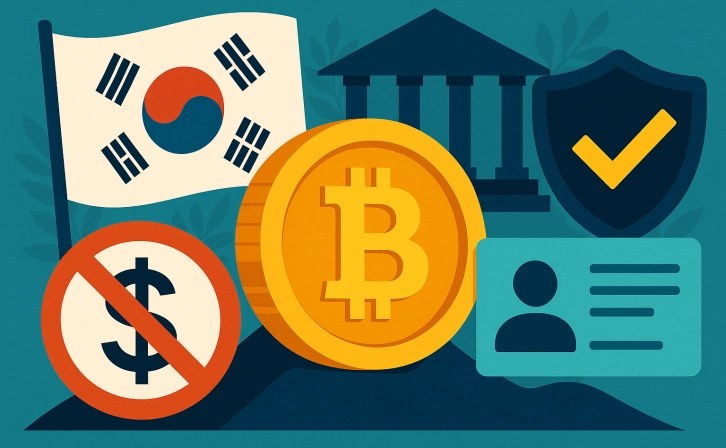
South Korea has been preparing for regulations that will facilitate access to crypto assets of corporate investors, while a significant tightening of the rules of the recognition of the Customer (AML) and the customer (KYC).
South Korea has taken an important step to make its regulations on the crypto money market more tight. While the country’s financial regulators plan to remove the ban that will enable corporate investors to access crypto assets, simultaneously hardening money laundering (AML) and the customer diagnosis (KYC) rules. The aim of these regulations is to increase market security while meeting increasing institutional interest and to adapt to international standards.
New regulations force domestic and foreign crypto exchanges to make users’ authentication processes more detailed. Platforms will no longer be content with collecting basic identity information; Address verification, face recognition and economic status analysis will also have to apply additional controls. At the same time, large -scale transactions within the scope of AML, wallets with money risk and suspicious mobility will be reported regularly.
In this context, the South Korean Financial Services Commission (FSC) established a new audit structure in cooperation with the Financial Information Analysis Unit (KOFIU). License renewal of crypto exchanges will no longer be evaluated not only technical competence, but also according to the level of compliance with AML/KYC processes. In addition, heavy fines and license cancellations for the stock exchanges with AML violations may be on the agenda.
Developments are seen as a sign of an important transformation in South Korea’s view of crypto. The sudden wave of investment in the period of 2017-2018 and the subsequent balloon led to the harsh interventions of the regulators. However, in recent years, the maturation of both corporate and retail investors has led the government to establish a more structured system. With the abolition of the institutional ban, the way for large capital funds to include products such as Bitcoin and Ethereum in crypto asset baskets.
The regulators emphasize that it is possible that the crypto market becomes more transparent, follow -up and safe not only with technology but by effective control. For this reason, AML/KYC reforms are not only a regulation, but also a strategic step to increase investor confidence. In this context, South Korea aims to establish a structure compatible with markets such as Singapore, EU and the USA.
Some critics, on the other hand, argue that harsh AML/KYC rules can suppress innovation and reduce the chances of small initiatives. However, government officials argue that these regulations will strengthen justice and market integrity, not competition.
As a result, the upcoming corporate crypto expansion of South Korea attracts attention not only with economic but also its regulatory architecture. The new AML and the KYC regime show that the country handles crypto both within the framework of both opportunity and responsibility.