Gensler: 'FIT 21 Endangers Investors and Capital Markets'
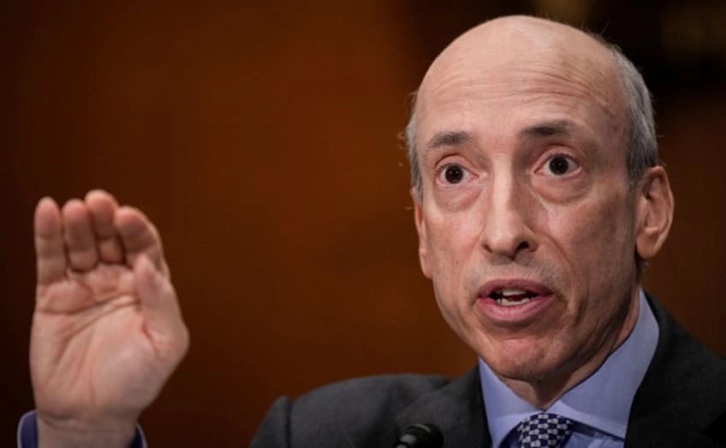
Securities and Exchange Commission (SEC) Chairman Gary Gensler said on Wednesday that the Financial Innovation and Technology Act for the 21st Century (FIT 21) would harm investors and hinder the work of the SEC.
“FIT 21 will create new regulatory gaps and threaten decades of precedent regarding investment contract supervision. This will expose investors and capital markets to immeasurable risks,” Gensler said. said.
FIT 21 is a bill jointly authored by the House Agriculture Committee and the House Financial Services Committee. It aims to explain how cryptocurrencies will be regulated by the SEC and the Derivatives Trading Commission (CFTC). The bill creates the term “digital commodity” for digital assets that fall outside the definition of securities and places these assets under the supervision of the CFTC.
According to Gensler, FIT 21 ignores long-standing precedent on how investment contracts are regulated. It puts the agency in a difficult position when it comes to approving self-proclaimed digital commodity issuers. It ignores Supreme Court decisions cited in the Howey Test, eliminates investor protections, and potentially allows investors to take excessive risks without proper disclosures.
U.S. securities laws were developed after the Great Depression to provide both the regulator and investors with tools to protect customers by imposing mandatory disclosures to protect consumers, Gensler said. He noted that cryptocurrency industry players are not willing to comply with these regulations.
“The bill would strip investment contracts recorded on blockchain from the legal definition of securities and the time-tested protections of most federal securities laws,” Gensler said. said. “By removing these investment contracts from the list of securities, the bill implicitly addresses a fact that courts have repeatedly ruled but that cryptocurrency market players have tried to deny: Many crypto assets are offered and sold as securities under existing laws.”
While the bill includes a provision allowing companies to self-certify that they are exporting “digital commodities,” it gives the SEC 60 days to evaluate whether those assets meet the bill’s definition of digital commodities. According to Gensler, this period is not enough considering the number of digital assets in circulation.
Gensler also criticized how the bill defines digital commodities, stating that it ignores the Howey Test precedent and the economic realities of the assets. In addition to this definition, the bill’s investor protection framework for cryptocurrency investors and the separation of exchanges from the law “could increase the risk to the American people,” he said.
Gensler noted that FIT 21 could also harm the broader U.S. capital markets by allowing companies to try to avoid SEC scrutiny by using some form of decentralized network.
The House of Representatives is expected to vote on the bill later Wednesday, but it is currently unlikely to pass the Senate and is not expected to become law this year.