
The European Parliament will vote for technological sovereignty in July: "The Digital Revolution is just beginning"
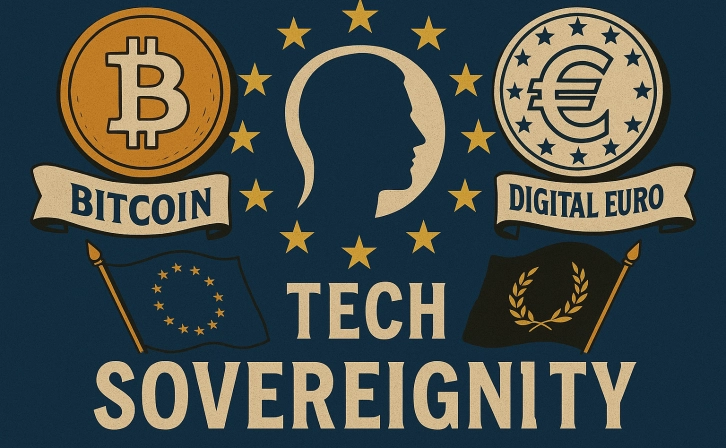
The European Union is preparing to take a historical step towards digital independence. The European Parliament, Blockchain, artificial intelligence and technology sovereignty, which supports the development of digital infrastructures, will vote in July.
The European Parliament is preparing to vote in July, a critical proposal that will guide digital strategies from cloud computing to artificial intelligence, from bloczincir infrastructure to cyber security.
The suggestion was prepared by the Industrial, Research and Energy Committee (ITER) and is supported by Sarah Knafo, a member of parliament known for his crypto -friendly identity. The report, which was adopted by ITER on June 3, calls for redefining the European Union’s digital sovereignty.
“Delayed Revolution of Europe”
Knafo, in his statement, emphasizing that Europe is delayed in digital transformation, expressed the following words:
“We are at the beginning of the digital revolution. It is far behind Europe, the USA and China. However, all engineering and scientific potential is available. Only the right political framework is missing.”
The suggestion focuses on the following issues:
Encouraging innovation investments in the private sector,
Energy efficient information processing and blockzincir infrastructure,
Privacy and data security in the field of digital finance,
Independence in critical digital fields: Artificial intelligence, chip production, communication infrastructure.
July vote: Zorlu negotiation is expected in parliament
The proposal is not yet a binding law. However, its adoption in the European Parliament will greatly shape the digital policy framework. The result of the text that will be presented to the vote in the session to be held in July will depend on the attitude of the center-health and center-left groups.
Knafo made the following comment about the process:
“If the right parties support the proposal, we can achieve the majority. However, left parties put pressure on the center-right block. The result will be determined in July.”
Bitcoin Reserve Call against Digital Euro
Sarah Knafo’s output in digital politics is not new. In his speech at the end of 2024, he clearly opposed the European Central Bank’s digital euro project and proposed to create a Bitcoin strategic reserve instead:
“No to the digital euro, yes to the Bitcoin reserve.”
However, the European Central Bank rejected this proposal. ECB President Christine Lagarde said in a statement at the beginning of 2025, arguing that the Central Bank reserves should be “liquid, safe and risk -free”.
Wind of Digital Sovereignty in Europe: Is real change possible?
Although Sarah Knafo’s proposal receives support from progressive circles, some European commentators are skeptical. Although the French media organization Frontières draws attention to the symbolic importance of the proposal, the majority of the 720 deputies in the parliament are not sure whether they will support this transformation.
A commentator wrote:
“Change will come from the peoples. There are movements in countries such as Germany, Poland, Hungary, the Netherlands.
Europe has admitted that it is late for technological sovereignty. However, this awareness, along with the right strategies, can ensure that the continent is an ambitious actor in the digital world. Sarah Knafo’s proposal offers not only a report, but also a vision that connects between decentralized technologies and freedom.
Another element that is so important that this proposal will pass through the parliament in July is: Will Europe draw its own way in the digital age or will it follow the standards of the USA and China?