
Based Rolep Solution in Ethereum
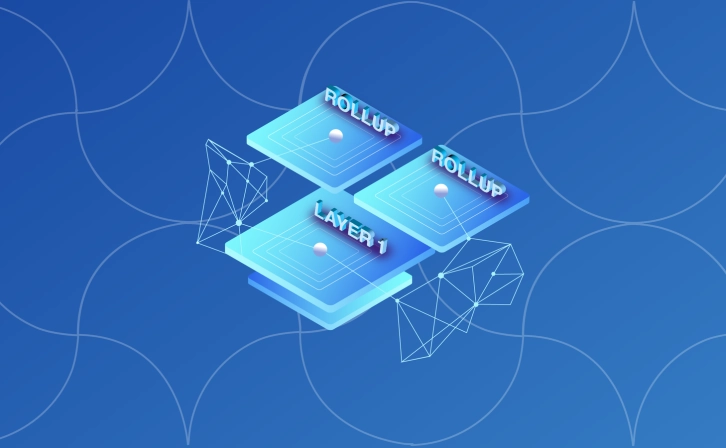
While the Layer-2 chains are increasing, some Ethereum developers emphasize the “Based Rollup” technology, which adopts a new approach to workability.
In recent weeks, there has been discussions in the Ethereum community with the concern that the chain would lose its competitiveness if some basic design problems were not solved. The focal point of the reactions was the layer-2 disintegration.
Ethereum adopted a Layer-2 scaling roadmap that encourages the development of “Layer-2 Rolls olan, which is a third-party auxiliary networks to scale the basic ecosystem.
This approach reduced fees by shifting events to these new networks and increased speed for end users. However, this created a large and fragmented layer-2 ecosystem.
Although Layer-2 networks send data back to Ethereum, they often have difficulty in communicating directly with each other. This makes the transition of assets and data between nets expensive and complex. In addition, the dependency on the central “Sequencer önemli, which transfers operations between block chain layers, creates the risk of a single error point.
Some Ethereum developers support the “Based Rollup” technology, which increases security and coexisiness to overcome these challenges. Unlike the Rollups, Most of the Rollups, unlike existing Rollup, instead of Layer-2, the Layer-1 chain of Layer-2.
In Layer-2 Rollups, operations are processed by a component called “sequencer .. This component groups more than one process and sends it to Ethereum.
However, in most existing roles, this is the center of Sequencer and is usually controlled by the company that develops Rollup. This centralization, transaction ranking and publishing manipulation and censorship risks.
Instead of using the Central Sequencer, the Based Rollups eliminate this risk using Ethereum’s built -in Sequencer, that is, the wide verifier community. In this way, transactions are carried out using Ethereum’s security and decentralization.
He proposed a roadmap based on the Layer-2 ROLLUP in 2022. This plan aimed to use the Layer-2 Rollups to overcome Ethereum’s high wages and slow trading speeds. However, the inability of different roles to communicate efficiently increased the problem of disintegration.
Based Rollups, because they share Sequencer in the Layer-1 chain, it enables quick data exchange between smart contracts. Espresso Systems CEO Ben Fisch said that Based Rollups could interact with each other in the same Ethereum block.
However, some technical obstacles need to be overcome in order to make Based Rollups wider. One of the biggest challenges is the necessity of production production - with the time of the block of Ethereum every 12 seconds.
The existing roles use two types of evidence systems: Zero-Knowledge (ZK) evidence and optimistic evidence. In order for the Based Rollups to work efficiently, evidence production rate must be compatible with the block time of Ethereum.
In addition, the Layer-1 “proposer ılan, which assumes Sequencing in BASED Rollups, may not be fair because it aims for economically maximum profit. They can sort the transactions again using the Mev (Maximal Extractable Value) opportunities. This can create process manipulation and imbalance for users.
In order to solve these problems, new economic incentive mechanisms are being developed, such as Based pre -approval. According to Fisch, Based Rollups offer a promising solution to reduce the problem of disintegration, but alone is not a miraculous solution.
“I think the Based Rollups solve a part of the problem, but not the only solution, and all the Layer-2s don’t have to be Based,” he said.