Ethereum's The Verge Upgrade: Security and Accessibility Increase
Ethereum's next major upgrade, "The Verge," aims to make Ethereum nodes run on everyday devices like phones and smartwatches by significantly reducing hardware requirements.
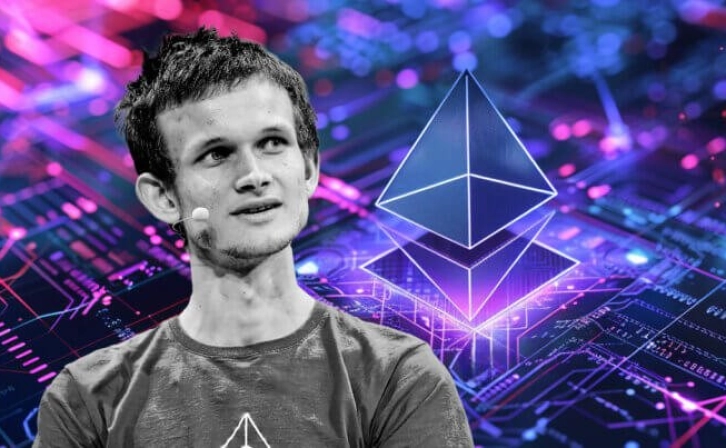
Vitalik Buterin, co-founder of Ethereum, shared his views and detailed plans about this upgrade. The main goal of the upgrade is to make the Ethereum network both more secure and accessible to a wider audience.
“The Verge” upgrade will reduce the hardware requirements of running nodes on the Ethereum network, freeing node operators from large data storage obligations. This will make running nodes more feasible, especially for solo stakers and individual users.
Currently, running an Ethereum node requires hundreds of gigabytes of data storage. This is a matter of keeping all on-chain data necessary to secure the network and verify transaction history. However, this poses a major hurdle for individual users.
“The Verge” suggests a method called “stateless verification” to solve this problem. This system will eliminate the need for nodes to store the entire blockchain to verify blocks.
Buterin stated that with this innovation, small devices such as mobile wallets, browser wallets and even smart watches will be able to run the Ethereum chain with full verification. This will reduce the technical difficulties of running nodes and enable more users to contribute to the network.
One of the basic technologies used for stateless verification is Verkle trees. Verkle trees are a cryptographic structure that reduces proof sizes and makes verification of data more efficient. The use of this structure will allow Ethereum nodes to perform full verification with less data storage.
Buterin acknowledged that Verkle trees may be sensitive to quantum computers and stated that these structures may need to be changed in the coming years. In the future, STARK-based binary hash trees can be used instead of Verkle trees, which are more secure and resistant to quantum threats in the long term.
The Verge upgrade also brings changes to Ethereum’s gas fee system. Under Ethereum Improvement Proposal (EIP)-4762, this change to gas fees aims to optimize the costs of cryptographic transactions.
The current gas system may be insufficient for computation-intensive operations, which may limit the scalability of the network.
The “multidimensional gas” system proposed by Buterin aims to manage resource use more efficiently by dividing gas costs into different categories such as data, calculation and state access. These changes will both increase the security of the network and improve its scalability.
Another important point that Buterin emphasized is that The Verge upgrade offers significant advantages for solo staking. Since running nodes post-upgrade will require less technical skills and hardware, individual users will be more incentivized to participate in the Ethereum network by staking.
This will increase decentralization and enable the Ethereum network to expand to a wider user base.
The Verge upgrade aims to make the Ethereum network both safer and more accessible. With reduced hardware requirements and innovations such as stateless verification, Ethereum nodes can be run on smaller devices and solo staking may become more common.
This is considered an important step that will contribute to the long-term growth of Ethereum.