Ethereum Supply and Dencun Upgrade: Impact of EIP-4844
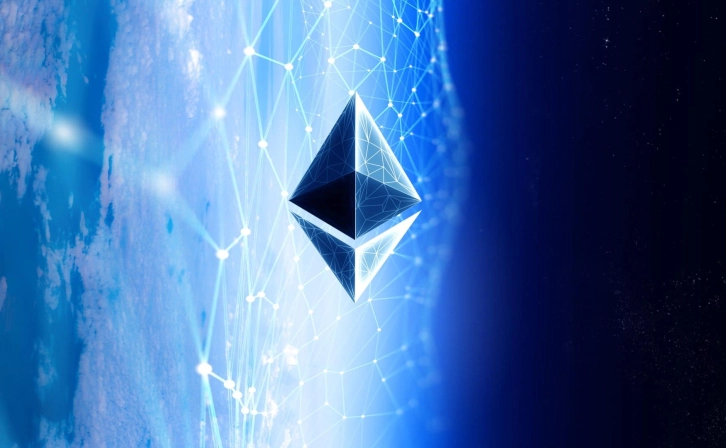
Ethereum supply, which has become one of the most intriguing topics in the cryptocurrency market lately, has become a balance puzzle. Since mid-April, the supply has been steadily increasing, and this increase has potential impacts on both the functioning of the network and the value of the ETH token.
Behind this situation lie two critical Ethereum upgrades: Dencun and EIP-4844. Let’s take a closer look at what these upgrades mean and how they affect the Ethereum supply.
The Dencun upgrade increased the block size on the Ethereum mainnet. Although this may seem like a positive development at first glance, the truth is a little more complicated. Increasing the block size means more transactions can be processed simultaneously. However, this also reduces competition for block space. While less competition may lead to lower transaction fees, it also has a negative side effect: It reduces miners’ motivation to confirm blocks and generate new ETH.
Although the concept of mining disappeared after Ethereum switched from Proof-of-Work (proof-of-work) mechanism to Proof-of-Stake (proof-of-stake) mechanism, validators who verify blocks still generate new ETH. At this point, low competition for block space could lead to less ETH production.
EIP-4844 is an upgrade that takes a different approach. This upgrade introduces a new mechanism called “blops”. Blops are used to temporarily store transaction data in a location separate from the main network’s main chain. In this way, transaction data no longer takes up space in the blocks themselves, thus reducing transaction fees without the need to increase the block size.
This innovation brought by EIP-4844 has significantly reduced transaction costs, especially in Ethereum layer-2 networks such as Arbitrum and Optimism. However, this positive development also has a downside: the amount of ETH burned on the Ethereum mainnet has decreased significantly.
As you may remember, Ethereum has switched to the Proof-of-Stake mechanism with the EIP-1559 protocol since September 2022. One of the most important innovations of this transition was the burning of transaction fees. With EIP-1559, some of the transaction fees are now eliminated. This creates supply pressure and potentially contributes to the long-term value increase of the ETH token.
However, developments in recent months indicate that ETH supply is heading towards inflation again. Due to the impact of Dencun and EIP-4844, the amount of ETH burned began to fail to meet the amount of newly produced ETH.
However, it is necessary to consider the situation from a slightly broader perspective. Considering that more than 1.5 billion ETH has been burned in total since September 2022, the ETH supply is still significantly reduced. The amount of ETH burned so far corresponds to a decrease of 345,000 ETH compared to the 1.36 billion new ETH added. This decrease corresponds to a value of approximately 1.1 billion dollars at current prices.
In short, Ethereum supply is currently at a delicate balance point. Although Dencun and EIP-4844 increase the usability of the network, they also change the factors affecting ETH supply. It is necessary to closely monitor how the use of the network and the amount of ETH burned will progress in the coming period. This data will provide important clues to understand the long-term supply-demand dynamics of Ethereum and the value of the ETH token.