Could Stablecoins Be Russia's Savior in Trade with China?
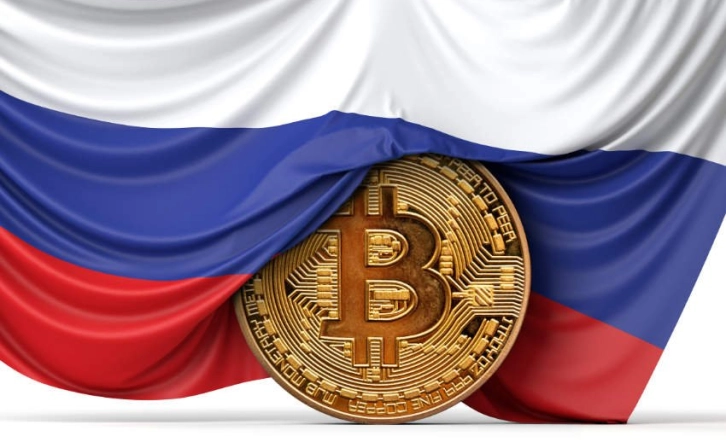
The sanctions imposed after the Russia-Ukraine War literally squeezed the Russian economy in a vice. One of the most painful effects of these sanctions was the disruption of international trade. When the use of the traditional banking system was restricted, Russia sought alternative ways. As a result of this search, "stablecoins", a subtype of cryptocurrencies, came to the fore.
While the Central Bank of Russia was looking for a solution to maintain trade volume with China in the shadow of sanctions, it discussed the legalization of stablecoins in cross-border trade. This move could be an important part of the strategy to reduce the impact of sanctions. The signals coming from the Central Bank officials are also in this direction.
Aleksey Guznov, deputy governor of the Central Bank of Russia, made important statements on the subject in an interview with the state newspaper Izvestia. Guznov stated that he is in the process of discussing a proposal to legalize stablecoins, and that the ultimate goal is to allow “individuals to transfer stablecoins to Russia, accumulate them and use them for international payments.”
This statement is an indication that Russia plans to use stablecoins not only as a temporary solution but also in the long term. However, Guznov has not yet given a date for when this regulation will come into force.
So, what advantages do stablecoins offer over traditional cryptocurrencies? Why is Russia considering using this method? Traditional cryptocurrencies such as Bitcoin (BTC) are known for their high volatility. This may make using cryptocurrencies as an investment tool risky. Stablecoins, unlike Bitcoin, are backed by assets such as gold or the US Dollar to keep values constant. In this way, stablecoins are not affected by the high price fluctuations in traditional cryptocurrencies.
In addition, the fact that stablecoins have a “central issuer” is also an important advantage for the Central Bank of Russia. As is known, the Central Bank of Russia was previously opposed to the legalization of digital assets. One of the most important reasons for this opposition was cited as the difficulty in controlling digital assets. Managing stablecoins in a central structure can eliminate this control problem and mean that the Central Bank of Russia can provide more control.
However, it should not be forgotten that the legalization process of stablecoins may encounter some obstacles in the coming period. The most important of these obstacles is international sanctions compliance. In particular, Tether, one of the world’s largest stablecoin providers, seems keen to comply with sanctions policies. Tether recently collaborated with a company called Chainalysis to detect wallets that do not comply with sanctions. This could disrupt Russia’s plans to bypass sanctions through stablecoins.
The Bank of Russia’s idea of legalizing stablecoins could be a new ray of hope for the Russian economy in the shadow of sanctions. However, it remains unclear how this process will take shape in the coming period and how problems such as sanctions compliance will be resolved. Still, Russia’s move toward stablecoins, a subtype of cryptocurrencies, also points to potential changes in the global trade structure.
This trade route, which will be carried out by going beyond the traditional banking system, has the potential to reduce the effects of sanctions in the long term. However, this move may also cause fluctuations in the global financial system. Other countries may also turn to stablecoins to bypass sanctions or introduce regulations on stablecoins to increase the effectiveness of sanctions. It is necessary to follow the developments in this field closely in the coming period.
Russia’s stablecoin move also gives clues about the future of global trade. Perhaps this could be the beginning of a new era in which the traditional financial system will be shaken to its core and cryptocurrencies will gain more ground. However, whether this possibility will come true or not depends on the developments that will occur in the coming years.