
Bitcoin turns into the backbone of the web3: the decentralized infrastructure of the new age
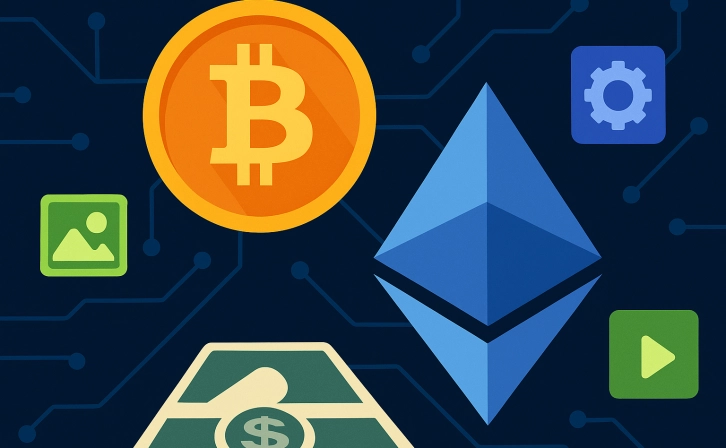
Bitcoin, which is only known as digital gold for many years, opens a new page in its web3 infrastructure. Innovations such as Lightning Network, Ordinals, BRC-20 and Stacks make Bitcoin a strong participant of the web3 ecosystem, not just a value storage tool, but also a strong participant of the web3 ecosystem.
Bitcoin has been referred to for many years with the definition of “digital gold ;; A value of value storage against financial crises was seen as a limited desire asset that provides protection against inflation. However, the technological developments in 2024 and 2025 shake Bitcoin’s classic image and make it a part of a much larger transformation: to be the backbone of the web3.
Web3 is an internet vision in which decentralized applications (DApp), NFTs, DAOs and user -oriented data economy are built. To date, this structure was based on platforms such as Ethereum, especially Avalanche and Polkadot. However, the recent protocol updates on Bitcoin and the work of the developer community make Bitcoin an ambitious actor in this field.
In this transformation, the three main components stand out: Lightning Network, Ordinals and BRC-20. Lightning Network is a second layer protocol developed to solve Bitcoin’s scalability problems. It makes it possible to perform instant, low -cost transactions and creates a suitable environment for micro payments and web3 applications. Ordinals is a system that allows the creation of NFTs on the Bitcoin block chain. This technology, which allows each Satoshi (the smallest unit of Bitcoin) to be written, makes it possible to host digital collections directly on the Bitcoin network.
The BRC-20 is a version of the ERC-20 standards in Ethereum based on Bitcoin. With this protocol, token can be created on Bitcoin and decentralized finance (defi) applications can be built. Projects like Stacks expand the web3 infrastructure by giving Bitcoin smart contract capabilities. Thanks to these developments, NFT marketplace, game platforms and defi applications can be developed directly using Bitcoin infrastructure.
Bitcoin’s integration process into the web3 represents not only technological, but also an ideological transformation. The Bitcoin network, built with values such as decentralization and censorship resistance, is in great harmony with the basic principles of Web3. In terms of security, the fact that it has a more rooted and widespread confirmatory network compared to platforms such as Ethereum makes Bitcoin attractive.
Of course, this transformation brings some criticism. There are concerns that Bitcoin’s simple and simple structure will deteriorate, the network may remain under load, or that NFTs may cause network blockage. However, developers are working on more modular and layered solutions against these problems.
As a result, evolution to Bitcoin’s web3 infrastructure represents one of the largest shifts in the history of crypto currency, not only a technical innovation. Bitcoin is no longer just a digital value tank; It is also the carrier of Dapps, NFTs and decentralized data economy.