After the Halving, 68% of Transactions Were Made with Runes!
The halving in May 2023, one of the last major events in the Bitcoin network, significantly affected the income of Bitcoin miners by halving mining rewards. While this situation threatens the future of this segment, which plays a vital role in ensuring the security of the network, it has brought up the search for new solutions in the sector. The Runes protocol, which emerged as one of the first answers to this search, attracted attention by constituting a significant portion of Bitcoin transactions after the Bitcoin halving. However, how sustainable this situation is and whether Runes is the savior of miners are among the questions that have not yet been answered clearly.
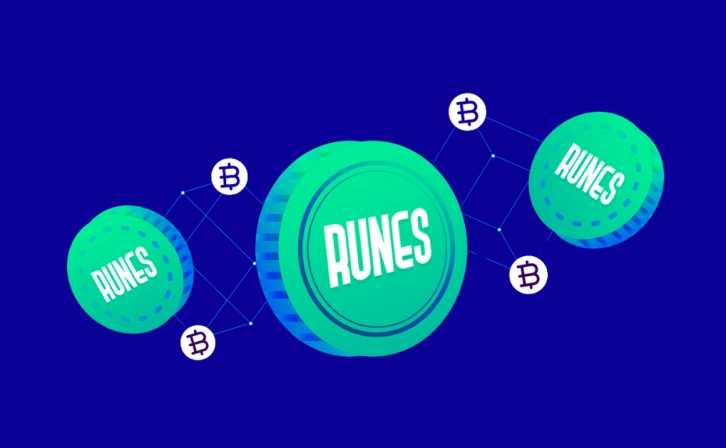
Runes is a protocol that uses the Bitcoin network, just like ERC-20 tokens. It pays with Bitcoin to create new tokens. But unlike traditional methods, Runes uses the Unspent Transaction Output (UTXO) model to “scrape” new tokens into Bitcoin. This model differs from the “write” accounting model used by the Ordinals protocol. The Runes protocol allows users to mark individual satoshis (the smallest unit of Bitcoin) with unique identification numbers and add random data directly to the Bitcoin blockchain. In this way, it aims to provide a new function to the Bitcoin network while also providing income to miners through transaction fees.
Launched on April 20, 2023, Runes quickly captured a significant portion of Bitcoin transactions. According to data shared by blockchain research firm Crypto Koryo, Runes has processed more than 2.38 million transactions since its launch. In fact, Runes, which reached up to 68% of total Bitcoin transactions in a post-halving period, also earned miners a significant amount of transaction fees. Contributing to more than 70% of total Bitcoin transaction fees on halving day, Runes generated over $2.4 million in revenue. This initially created an optimistic perspective that the Runes protocol could compensate for the loss of income experienced by miners due to halving.
However, it is debatable whether this optimism is long-lasting. Runes’ trading volume has decreased significantly following the initial excitement following the launch. The number of transactions, which exceeded 750,000 on the halving day, dropped by almost half to 312,000 the next day. This has raised suspicions that interest in Runes may be a passing fad and that the protocol may struggle to sustain its transaction volume and thus the revenue stream it provides to miners.
In addition to questions about the future of the Runes protocol and the sustainability of its benefit to miners, there are other concerns among the cryptocurrency community. One of these is the uncertainties that may be created in the future by the regulatory environment, which is not yet clear since the Runes protocol is still new. Another concern is potential threats in the field of cyber security. Adopting a more innovative approach than traditional methods, Runes may be more vulnerable to cyber attacks. Finally, it is among the concerns that the additional load that Runes transactions impose on the Bitcoin network may negatively affect the transaction speed and efficiency of the network.
Although it is not yet clear what the Runes protocol means for the future of Bitcoin miners, it sheds light on innovative pursuits in the cryptocurrency market (two flame emojis). It is expected that the search for alternative solutions will continue to overcome the difficulties created by Bitcoin halving. Within the scope of these searches, other solutions as new as the Runes protocol may emerge.